Thursday, 13 August 2015


  Maui......Where Life Is A Beach

  The US State of Hawaii is very popular with tourists. If you are looking for: nice beaches for relaxing, swimming, surfing, diving or snorkeling then the Hawaii Islands may be for you. The main islands are Oahu, Maui, Kauai, Lanai, Molokai, and the Big Island of Hawaii. Most people land on Oahu which has the well known city of Honolulu, Waikiki Beach; and the famous Pearl Harbour.

   I landed on Oahu and awaited my short flight over to Kahului Airport on Maui where I would stay with  friends (John + Ann) in Lahaina on the west coast; it was very hot on that day...much like Fiji. One thing I found out early was how many Japanese own hotels and resorts here, I guess business is separated from historical events (Pearl Harbour). On Maui, after tourism, sugar cane and pineapple exports sustain the economy.


    When I awoke on my second day I used John's bike to ride around the northwest coast; the scenery was nice and the 80 km. pedal up and down the hills was a workout. This day was very satisfying because with some effort I found tranquility (not many cars use this part of the island), nice scenery, and I covered new ground. The next day I started off by walking to the top of the sugar cane roads and past the locals homes; that was not so touristy like the nice beaches; many junk cars and piles of garbage. I continued into the mountain valleys and followed the Kanaha Valley which was very scenic; after an 8 hour hike I was beat but satisfied. That night Ann told me that a friend needed some help coaching 8 + 9 year old's with soccer so the next day I met with him and decided I would coach Tues. and Thurs. since I was there for one month. After meeting this guy John, Ann and I headed to Napili for snorkeling, I saw some beautiful fish.

  I had met a Hawaiian girl on the plane (Tafa) and I give her John's number, she phoned and asked me if I wanted to go to the club dancing. We met at the club, she brought her sister; I learned from her that this "very friendly" young lady (Tafa) was married. John told me that Hawaiian girls will meet guys and lead them on in hopes that the sucker will buy her drinks all night.

  A couple of days later I went with Ann and her friend for another 8 hour hike; this time up the Olowalu Valley. We ventured until we got to an unclimbable waterfall surrounded by sheer cliffs; there were so many types of cactus. That was a tiring day, despite all of the cuts I got, I found the day very satisfying.


 In the next days I snorkeled every morning, the Black Rock up by Kaanapali Beach was the best I had done thus far. On a Friday I went up to the Big L that is mounted above Lahaina and got some good photo's; above that is a grave for David Malo who died in 1853; he was the first Hawaiin to read. On the Saturday I refereed soccer and then got prepped for Halloween; the Halloween Parade along Front St. was incredible; people from all over come to this event for the costume competition, amazing (and expensive) costumes.

   After some beach life and hanging lose for a couple of weeks listening to KA-01 95 FM I thought I would go the library and pick up a hiking Maui book. Ann knew this Sharon that was looking for someone to clean condos for a day here and there and I thought I may as well stay busy, I was already refereeing and coaching soccer in between biking, hiking, and snorkeling. It was Christmas and there I was feeling hot in shorts and a t-shirt. We went to see John Denver at the Lahaina Civic Amphitheatre, he played most of his old classics.


Photo's turned while loading


  I picked a hike from the Hiking Maui book and set out to unintentionally put myself through hell. I bicycled 25 kms east of Lahaina to reach the start of the Kealalola Ridge Hike; it was supposed to be 4 hours to climb to a height of 1,500 metres (4,500 ft.). Once I gained elevation I could see the highway dotted with cars that looked like little match boxes, the lower landscape was very brown but the alpine was lush. It started to rain when I got up a bit further and I walked in that liquid sunshine for over an hour before the sky cleared again, giving me tremendous views of the rugged gully with a 1,000 metre (3,000 ft.) drop. I followed the Ukumehame Gulch for awhile before I headed up into the clouds and more rain. While weaving through ferns; eating thimble berries along the way, I stumbled on a grow op. Who would think that a hike in the Hiking Maui book would lead a person into someones Marijuana Crop?

  I was so wet and getting cold with the higher elevation so I turned to head back. Making my way down through the mist I approached these two guys who were on their way up, they were carrying water and fertilizer; they were not smiling. Once I got down below the clouds I got a great view of Kihea across the Maalaea Bay. I found John's stashed bike and road the 25 kms. back....what a workout day.

  My next trip started with refereeing at Kahului before riding around the coast for photo's; there was a great start with a rainbow that had 13 colours. I got as far as the Nakalele Blowhole; for which I got good photo's, and then it started to rain....then pour. I had a 30 km. bike ride home and the rain was coming down in buckets; I provided a lot of entertainment for drivers and their passengers. A few days later I went to another John's place in Wailuku where I stayed or 2 days.

  From Wailuku my plan was to ride up to the Haleakala Crater so I headed out on the 45 km ride to the start of the climb with rain and wind at my back. As I was riding the rain became torrential and the gusts of wind blew the bike off the road several times. From the turnoff for the crater it is about 40 kms along a road covered in switch backs to reach the top; I was thinking I was crazy. I climbed about 1,000 metres (3,000 ft.) and I could feel my knees burn; the terrain was very steep; I was tired, soaked, and muddy. Once I got up to 2,000 metres the visibility was nil and the rain/wind were incredible. I re-examined my purpose (to see and photograph the crater) and realized that I would not even be able to see the crater never mind photograph it. I knew there was a large tropical system in the area but this was my second last day so I had to try to make it up the mountain. Feeling dejected and beat by the elements I headed for the long journey back to Lahaina; in my journal I wrote " today I suffered so much, for nothing". I rode 135 kms., much of that against the wind; no wonder my knees hurt.

  After riding about 1,500 kms on Maui I finished my time on the Hawaiian Islands at Pearl Harbour on Oahu; I will save you the details of that, you can search on-line. There would have been a huge difference in my visit to Maui if I did not stay with friends; it is very expensive there, especially for one month. I would have to say that I found this second largest island a paradise. The beaches were beautiful, the water was crystal clear, and there are plenty of things to do; for both the outdoors person or the book reader. If you do not want to punish yourself with bike rides and hikes you can always have "life on the beach" on a Hawaiian Island.




Tuesday, 11 August 2015


 Guilin to Heng Shan Mountain.....China

     In China there are many mountains but for the Chinese people some are more famous; I am referring to the five great mountains, four sacred mountains of Buddhism, and four sacred mountains of Taoism. I tried to climb many mountains while in China; the climbing most often was easy, getting to the mountain perhaps not so simple.

  I was in Guilin, Hunan, which was a great touristy place to visit; the locals were friendly and there were plenty of foreigners around visiting the sites. Looking at my map I planned to go north and climb Heng Shan mountain, it is one of the five great mountains; so I bought a train ticket to the city of Hengshan. The only train ticket available was at 12:43 am, and the train was a "slow train" so that meant the trip would be 10 hours for the approx. 320 km ride. The train system throughout China was a little complicated, they have the D train, F train, fast train; the fast trains only go a certain route, the slow trains yield to all other train traffic so one is always stopped (with locals who most often take the slow train). So I sat on the hard bench seat with the crowds of local villagers and I was lucky enough to meet a young person who spoke English......we talked through the night. The long slow train rides can be brutal BUT you get to endure the journey with regular folks (I call them sweat trains).

  When I got off of the train I noticed that only about 5 other people got off, the temperature was already 38 degrees. I rounded the corner to go down the steps and saw that Hengshan was a disgusting small city with dirty streets. The locals looked at me like I was from outer space; I wondered how this place could be the gateway to one of the 5 great mountains. I walked down the main street and everyone was looking at me. There were many garbage piles burning in the streets, junk laying around, chickens and dogs were roaming around picking in the dirt. I could hear hey, hey hey! There was a shop with these old prostitutes at the door and they were gesturing for me to come over, I ignored them. One of these mid-40's ladies came out on the street and was pulling my arm towards the shop, I just kept walking saying no,no until she gave up.

  With small cities like Hengshan it is very difficult to communicate; sometimes people will know a young person who they call and that young person has a basic level of English. I walked to the end of that main street gesturing to people "sleep" so they could point me to a hotel but they just could not understand. I traveled so much in China so I was used to being in places where communication was difficult, it was frustrating at times. I ended up to text the young student from the train and she called me; I then give the phone to a guy on the street and she explained hotel in Chinese. This man gestured across the highway, which was at the end of the main street, and then I headed across to an old dilapidated building. When I entered I surprised a lady at the front desk and she started saying many things in Mandarin, I said "ting bu dong" (I do not understand) and she smiled. For so long I tried to communicate with her that I wanted a room; she talked Chinese and I talked English. Finally I called that young student from the train again and she talked to the lady....I got a room.

   The room was gross, although I have slept in a lot worse. When I turned on the tap in the washroom the water was brown; there were two ants nests in the wall, I could see hundreds of them coming and going. I had to eat and somehow I had to get some rest....more importantly I had to find out how to get to the base of the mountain that I would climb the next day. The hotel did not have a restaurant so I headed back over to the main street of town and chose what I thought would be the only option that I had for eating. There was a photo on the wall of chicken soup with rice so I ordered that; people were stopping at the restaurant door to stare. When the soup came it was disgusting, there was just a broth with many chicken bones (very little meat) and the chicken head. I ate the rice and then left to search for the route to climb the mountain. I pointed at a map and tried to ask people "Heng Shan, Heng Shan...man it took forever before a person finally gestured to an old bus.

   I ended up getting on that bus and the lady said 5 RMB, I knew by that sum that the start of the mountain was quit far. 20 kms. we drove to a place called Hangshan...which was the starting point for Heng Shan. For the mountains popular with the Chinese there are many shops at the base that sell souvenirs and incense for worshiping Buddha. Many people were saying hello, hello, hotel. NOW I knew where the mountain was, it was time to get back on the bus that had just brought me there 5 minutes earlier. The conductor of the bus (usually the wife of the driver) closed the door on the bus, I knocked on the door for her to let me in and the lady was saying no, no. I tried to go in the front door and this lady could not understand why I wanted to take a bus back to where I had just come. It was frustrating but also a bit humorous but the lady finally let me in the bus. She and her husband were talking and looking at me like I was crazy, I was trying to use gestures to tell them that I just wanted to see where the mountain entrance was but they just could not grasp that concept.

   I made it back to the hotel and passed out (I had been awake for 35 hours) until the all too common fireworks woke me up at about 5am. Fireworks in China can go off at any hour of any day, this noise pollution is a big problem in the country.

  After my instant noodles in the morning I took the sweat bus to Hangshan and walked to the end of the street of shops. I saw two young guys and they spoke English well, I asked them if I go straight to climb the mountain or turn right; they said straight but it is very difficult, right is where the Chinese go to take a bus most of the way up; straight it was. I walked about an hour up the road and there was one temple, that was a good sign because these great mountains have many temples on the sides; with a large one at the top. I came up to a fork in the road with a sign that only had Chinese characters, a motorcycle approached and asked me if I wanted a ride for 2 RMB, I feared I had went the wrong way so I showed him the map on the brochure and said I wanted to go to a temple near the bottom of the mountain. I hopped on his bike and he took me off the beaten track to a place with a restaurant; he wanted 200 RMB from me. I argued with him and in the end he took me back down to the temple for 20 RMB. I walked the other route and came upon a pagoda which I climbed in order to get a view. I could see from the top that there were some temples dotting the side of the mountain. Once I got down a lady gestured to me, pointing to a path, soon after I saw a sign with the peaks name; it was to be 11 kms. to get there.

  Temple after temple I passed; there was one neat old residence of someone famous but like all sacred mountains they are too repetitious (unless you are Buddhist). Once on top the large temple  was very dirty and so crowded, I did not see a foreigner ( the Chinese took the bus). The peak is about 2,000 metres and a big storm moved in while I was up there. The thunder and lightening were right after each other so the eye of the storm was directly overhead, you could feel the electricity when the flash of lightening appeared. I looked for cover and found an English speaker in the crowd named Sunny, she was a delight to meet, she took pressure off. I do not enjoy being around hundreds of people when most of them smoke, they throw the incense (with plastic wrap) and fireworks in the burn pits so it generally makes for a loud and smelly occasion.

   After all of the exertion of climbing the mountain on a very hot day I took the bus back to the luxurious hotel room (not) in Hengshan, which is where you do not want to go to climb Heng Shan.

Monday, 10 August 2015


  What You See When You Do Not Have A Camera

  There are many reasons for not capturing an image on a camera; one is in a moving vehicle, the timing is not right, the shot would be in bad taste, or you simply do not have a camera with you. I have many images described in my journals and several that are implanted in my mind. Lucky for me that I can close my eyes and envision either the scenery or the living beings that I have viewed. I will omit the death and carnage from accidents, as I have been on many mountain roads and highways that have claimed lives. I will also leave out the hundreds of examples of extreme poverty. Here are just a few of the many sights that I have been lucky enough to witness.

  Think if you will what would come to mind if you saw a woman breast feeding a human baby on one breast and a piglet on the other. This was a photo that would have been in bad taste, if I would have whipped out the camera. In Papua New Guinea I went through a village where I saw such a woman; I guessed that the mother pig died and that keeping this piglet alive may feed the family for years (providing generations of offspring).

  In Alabama there was an old black man sitting in a rocking chair on a porch who was wearing a large brim hat and smoking a pipe; farmland surrounded the tiny house...that was an awesome vision.

  When I was in southern Egypt there was a poor donkey with 3 large men riding on it's back. These guys were all plump; one was right over the animals rear, one in the middle, and one up by the neck; they had to weigh about 200 kilo's in total...."poor donkey"
  I was in the south of China walking around by the sea taking photo's; many people were attending to her/his fishing boat. I always seem to wander off the beaten track which generally gives one a better idea of how the locals are doing. I noticed a man repairing his fishing net with his daughter and thought it would be a good photo. I was just focusing the camera when this 9 or 10 year old girl looked up at me; she was so sad (not angry), her face told her story. I could see that she lived a poor life and just by me describing the look on her face now makes me sad.

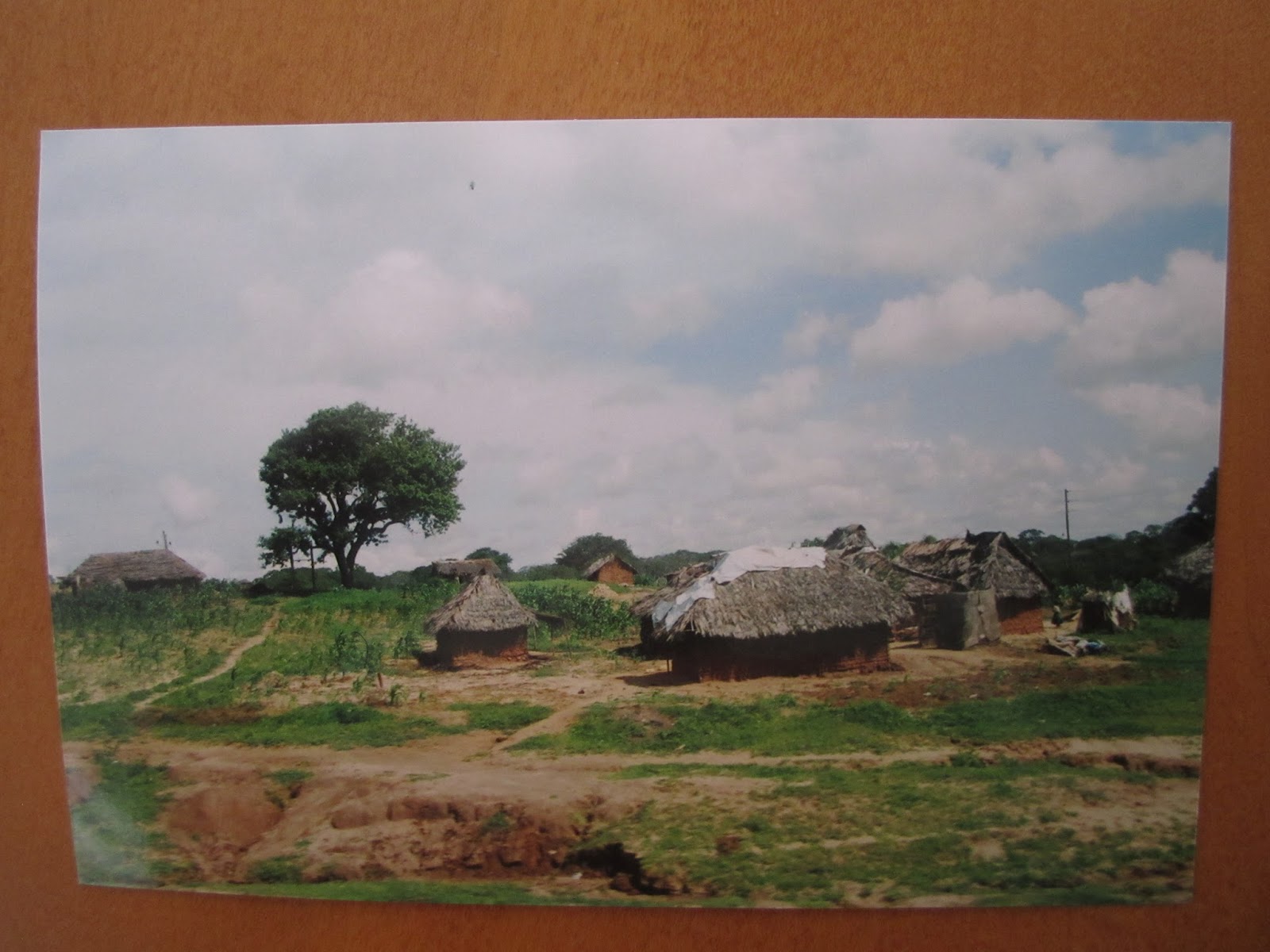
  I was on a bus in Tanzania and thankfully it was traveling slow through a market area, not slow enough for a photo out of the window though. I always keep my eyes peeled and I saw a young woman walking who was dressed in a beautiful blue wrap with a matching head scarf, she had a bucket balancing on her head. She was pulling a loaded donkey that had the same blue wrap over the mountain of goods that it carried. I took a double look and there on the top of the "donkey mountain"was a small baby (about 6 months) with the same blue outfit on. She/he was tied off with separate ropes; what a sight that was.
   I have many photo's of Angkor Wat in Cambodia but the enormity of the temple stops one from capturing the whole structure in one shot, it is amazing to stand at the front gate and view this wonder of the world.
  Busing from Vientiane to Pakse in Laos one travels along mountain roads where you see many locals in villages. What struck me out the bus window was how the young Laos women in that area were so gorgeous with their facial features but at the same time you could see what a hard life they were leading (heavy manual work, hiking up mountains with buckets of water....). How someone so young can look strikingly beautiful but worn out tired on the same face is amazing; really tells a story.

  Although these people would have been willing models for a photo, I have never taken one. Many of the transsexuals in Thailand are beautiful, on first glance you would never know that the person was born a male. Often a guy will look at him/her and not believe that this creature of beauty is a guy dressed as a woman.
  Many tombs in Egypt do not allow camera's because people cannot be trusted to keep the flash off. Some of the elaborate calligraphy in tombs all around the country are best captured with the naked eye and a description in a journal...just incredibly rewarding to see.
   Canada has some magnificent scenery...from coast to coast to coast. I saw so much of Canada when I either did not have a camera or I was too amateurish to catch a good shot. Beautiful country that we live in, lucky for us Canadians that we all live close to some natural beauty.
  While in Malaysia I headed to the north east to the beach. I am not a sit on the beach kind of person so I planned to climb on the cliffs. I walked past these two old ladies sunbathing on the beach in the morning; when I got back about 6 hours later these two women were still there. The skin on these ladies looked like it came off an alligator, they must have been sun worshiping for 60 years.

   It was the Independence Holiday in Korea and I went for a walk around Seoul. The city is surrounded by mountains so up I went; I approached a blind corner on the road that had a big circular mirror. I saw through the mirror a couple of military guys standing at attention and just before I took that rather neat shot I heard "no,no pictures"...for military reasons I guess.
   On safari in Tanzania I took so many photo's of wildlife, I had terrific luck with a guide who could locate an array of different animals. One shot I wish I could have gotten was a leopard dragging an impala up a tree. If I had an expensive camera I could have zoomed in for a great shot but hey, that would not be what I saw with the naked eye.
  For some reason I did not take any photo's of Dutch people with their family on bikes. It is a great site when the bicycle is the usual family vehicle; the baby usually sits up front behind a windshield.
   I was standing at a busy intersection of a city of north China when I noticed an old man with a wooden cart with handles on the other side of the street. This intersection had 5 lanes in each of the 4 directions, I felt lucky enough to be able to make it across alive myself using the crosswalk. I stood and watched this old guy cross the intersection at a 45 degree angle oblivious to the hundreds of cars that were swerving around him.

  One time I was trying to set up a place to sleep in Texas but the bugs were so terrible that my companion and I decided to pack up the car and move on. It was dusk and we had a bit of visibility; as we came over a dip there was the largest owl that I have seen standing in the middle of the path staring at the lights; not sure what type of owl it was but the height was almost one metre.
   In a small town along the Nile there were 3 young boys in a donkey driven wagon, the oldest boy with the reigns was about 8 years old, the other 2 about 6 and 4. The 3 boys were so cute as I watched them travel along the road; they were so happy with ear to ear grins.

   In many countries I have had the privilege to snorkel (without an underwater camera). Many of the worlds reefs leave a tourist awestruck at the sights under the sea. Though the experience of the underwater is awesome and a long lasting memory that should be caught on camera, it is the children that make the best natural models. Whichever country you go to the children of that area may provide you with the best shot.

  Kenya....North East With No Passport

    In my last blog I had just discovered with heart sinking realization that I had left my money belt with my passport in my hotel room in Garissa. In all my travels I have never taken my belt off, but to sleep only. For two days of riding in a hot bus I had kept my belt in the bottom of my small pack so it would not get wet from sweat. In Garissa I believed that I had to hide my important documents and cash well since the town is so dangerous. In 04/15 the militant group Al-Shabaab claimed responsibility for killing 147 and wounding 80 others at a school in Garissa; prior to that 200 people were killed in a mass shooting. So I knew that it was a dangerous place but I had no idea that I would be rushed to load a bus and neglect my duty to collect ALL my belongings.

   The Feed The Children truck had just left the village where the driver had delivered 80 sacks of cereal when I discovered I had no money belt in my pack. I had no clue what I was to do; should I try to go back to Mado Gashi so I could get the bus to Garissa and see if the unfriendly hotel manager had my money belt, or if it was still in the room? I had just a few Shillings, not enough for the bus fare.....it would take me 2 days to get back there. Ah, I was so distraught !!

   The truck stopped at 2 more small villages and I helped to unload supplies....I could not relax, I had no plan. The driver had some English so I had told him right away about my mishap, he told me that there was a police post up in the mountains where I could ask advice. We climbed a steep dirt hill to a small village called Boji........that is where I met my hero George.

   It was dark when we got to Boji, this small mountain village with no power was very isolated. There was a police post with 4 young officers there; they had a generator for power. Seems that new police officers get a posting at far off and dangerous locations, for a couple of years. These 4 guys were very sociable and sensitive to my situation. Boji was a dangerous location, George and his colleagues guarded the village against extremists that often entered the village at night to reek havoc on the locals there. George came up with a plan to stop any bus that would arrive at this checkpoint so I could get a ride to Isiolo; two were expected to drive by through the night. At about 3am we could here a bus climbing the hill so George and another officer got out their guns and stopped the driver by raising their rifles at the bus. After some conversation the driver agreed to let George and I get on the bus.

   Once we arrived in Isiolo we went to the police station to get someone to call over to Garissa to see if the police there could check my room to find the hidden money belt. When we walked in there were about 10 prostitutes sitting on the cement floor behind the front counter. When they saw me they went wild; most had no front teeth, they were all shapes and sizes....to tell you the truth they looked very dirty. It took about 30 minutes for the police in Garissa to check the hotel, of course the manager said they did not find anything; I told them I just wanted the passport, do not worry about the money. I obtained a small ripped piece of paper (police report) that I could keep as proof of a lost or stolen passport. I walked out of that station licking my wounds.

  So we continued with George's plan, we caught a matutu from Isiolo to Meru arriving about 8am. He insisted on buying me breakfast and then he bought me a bus ticket to Nairobi and gave me 3,000 Shillings so I could survive until I got my business worked out with the Canadian Embassy. It was more than amazing that George would trust me to transfer this loan back into his account once I got my finances in order in Nairobi. For a person who makes so little to trust me (a complete stranger) is an encouraging sign for humanity. So George...if you read this blog (we are Facebook friends) then thank you once again for being my hero!!

  I arrived in Nairobi at about 3pm, I had been awake more than 30 hours and had went from being so thrilled to be surrounded by kids in small villages to the hustle and bustle of Nairobi. After arriving at the Embassy I found out that it was going to be $220.00 to get a temporary passport. I canceled my credit card, filled out paperwork and phoned my wife twice. What happens while a person waits for their temporary passport to be issued (white in colour) is the Canadian Government loans you 12,000 Shillings (just over $200.00) to hold you over until you can make other arrangements. I was to have to wait in Nairobi until the following Monday or Tuesday to get my passport which was very near the end of my stay in Kenya.

   By days end I had been awake for 48 hours and was worried that my last days of adventure would be spent in Nairobi. I was familiar with the city so that was a plus but I also recognized there was nothing here for me. On the way to my familiar hotel I heard a thud and looked over to see a man flying head over heals about 3 metres in the air. The pick up truck that hit him reversed to the body, pulled him off to the side and then hopped back in his truck and drove away...I had to get out of this place.

    In the morning I loaded a bus to Meru, I was going to use the money I had left after paying George back to try to get some pleasant memories. From Meru I loaded a matutu to Isiolo and checked into a hotel for 700 Shillings ($12.00). Isiolo is a dusty plain surrounded by mountains. From the hotel roof I had a good view of Mt. Kenya which made for some good photo's. There are many street kids here; by day they beg and steal food, at night they huddle together to sleep on cement in front of the shops. So many children are discarded by parents and must fend for themselves...our kids in Canada are for the most part supported by many people.

Sunday, 9 August 2015


  Garissa to Mado Gashi.....Kenya

   In the last blog I had made my way from Mombasa to Garissa, Kenya via a dirty and barren route that give me views of typical isolated villages. Many citizens of these villages and small towns are aided by relief organizations since the land is basically desert with little to no water or vegetation. For us westerners it is a peak into the challenge that some humans have to endure to survive.

   Once I reached the dirty little town of Garissa I found a hotel on the main street and walked around for photo's. I got onto the roof of the hotel which was 3 floors (tallest building) and I could see that all of the land outside the town was desolate. My next plan was to find out when a bus would leave for the northern town of Mado Gashi some 200 kms ahead( I was told about 7:30 am). Once I solidified those plans then I was ready to walk among the locals and sort of "take it all in". Some aspects that I started to get used to were the yelling at markets and bus stops, disease ridden dogs wandering the streets and in this town a bloated dead donkey and camel laying on the street. The locals seemed very curious and many smiled, I could not help to notice that their feet and hands were like rough leather. Many people have bare feet while others wear these sandals that are made of tires, they cut a slab of car tire and attach a strap that goes around their ankle.

   At 6:30 am I heard a lot of commotion and went downstairs to find the 7:30 bus was already packed to leave at 6:30 and looked full, I raced upstairs to grab my backpack and dropped off my key before loading the bus, We passed a man on a donkey driven cart that had a mountain of green plants; I am not sure where he got them but it sure looked neat. About 10 minutes into the trip the bus was stopped by some men and some passengers got off. We sat there in the bus, that was already heating up in the early am, and there was a lot of yelling, I am not sure what the excitement was about but we finally moved on. We passed many villages where the bus briefly stopped; ladies were selling cooked goat meat and camels milk.....there were hundreds of camels being shepherd on the horizon.

   The next village we stopped in the passengers all got out of the bus; nearest I could tell we would be here for an hour (through gestures on a watch). This village was larger than the ones earlier, there were clay and mud buildings with tiny shops. I went into the one shop and bought all of the biscuits they had figuring I would give them to the kids. I walked out with 10 boxes and soon I had about 30-40 kids around me, how would I disperse them fairly ?. I found a wall and squatted down to open the boxes, there was some chaos but I decided that I would give a child a package and say "GO", they would then run off. That seemed to work fine, the kids were very excited and I had just enough for them. The whole time there were two large hands in front of my face, two old men also wanted biscuits, I kept saying "for the children". We loaded the bus, so many kids were yelling and waiving as they chased the bus for a short distance.

   Some passengers were on the bus since Garissa while others had changed in the small villages that we had stopped in, there were a lot of men and a few women with their children. About 15 minutes into this part of a drive the bus approached an area with scrub bush and it came to a stop, two men got on with rifles and were yelling at passengers while pointing their guns. I am not sure if they were speaking Swahili but they seemed to want to check peoples documents. I was nervous to say the least, I did not know which group these guys represented, could be military, police, or an extremist group. About 5 men got off the bus and I watched out the window as these armed guys yelled at them; slapping a couple of them across the face. Other men were looking under the bus and in the storage compartment, I found out later that they were looking for human smuggling. Either Somalians or Ethiopians often hide in the buses as they enter into Kenya...I had said in the prior blog how the citizens were taking on a different appearance in Garissa. The bus moved on and I turned my head to watch the 5 guys left alone with the armed men; out in the middle of nowhere.

   I finally made it to Mado Gashi and saw quickly that I would not be staying in this place, it was small and rugged with sparse mud homes and a couple of small shops; while still on the bus I decided I would try to head north east. I was swarmed with children when I got off the bus, they were very eager to approach but the younger ones were terrified; some cried. I made my way to the one room police station and learned that the bus I arrived on turns back to go to Garissa and there was no bus that leaves from Mado Gashi to go north or west. I was told that a truck might come through town at about 4pm.....this give me about 4 hours in this new town. I played with the kids (flicking bottle caps), the people were friendly; I was asked by a man if I could get him into Canada. This man told me his life story that unfortunately mirrored what is common in the world these days. He used to have a herd of about 40 cows and a farm that employed about 10 workers, then the drought came and within two years he had no animals or crops in the field'

   After only 2 hours an old Feed The Children truck came into town and the driver agreed to take me with him on the rest of his journey. I loaded into the truck and waved to the kids as we headed off out of town. We stopped at a village to unload 80 sacks of cereal that are donated by the organization, that give me more time with some kids. We dropped by several other villages as the truck weaved east and west along it's route, it was an incredible experience.

   I reached into the bottom of my backpack to get a snack and could not feel my money pouch, it was so hot that I was not wearing it around my waste; it was getting soaked. I frantically dug around and found that it was not there. YOU HAVE GOT TO BE KIDDING ME........I left it in the hotel room in Garissa, oh my god!!!! Through the day I was using the Kenyan Shillings that I had in the front of my pack. In my money belt was my passport and about 25,000 Shillings ($500 Canadian), I was carrying enough to last me while touring places that probably did not have a bank. I quickly thought back to the frantic race back up to my room in Garissa since the bus was leaving an hour earlier than I was told. While sleeping I had hid the belt on top of the curtain box above the window and in my rush to grab my packs I failed to remember to grab it. What an idiot I thought, I was so angry at myself, my heart had sank to the bottom of my stomach.

  What was I going to do in such a poor area of Kenya with no food and no money ???


Saturday, 8 August 2015


 Kenya......Mombasa To Garissa

   I will be posting a blog about Nairobi (Nairobbery as it is often called) at a later date. For this post I will take you east to Mombasa and if I have time to places north that are very dangerous.

  One morning I set out on the bus from Nairobi for the 400 km trip east to Mombasa and the Indian Ocean; I was glad to get out of the capital city. The highway was very busy and with only one lane each way it was easy to see how this stretch of road got the reputation for being a dangerous route. I noticed and thought many things as I gazed out the window, such as the 100 men digging a ditch with pick and shovels; oh how a loader would put them out of a days work with 2 or 3 scoops. Just after the digging men was an overturned tractor trailer; what if the accident happened right at the spot where the men were working?


Some baboons lined the highway and many zebras were on the horizon, as the road seemed to worsen.

   I arrived in Mombasa and checked into the "Excellent Hotel" only to switch to the "Gloria" the next morning because there was too much noise at the Excellent. After checking into the Gloria I walked around to familiarize myself with the city. I felt a little pull on my backpack and turned quickly to see that a guy had already opened the zipper on my pack and was trying to rip me off (oh so common). I headed south of Mombasa to the beautiful Diani Beach on the Indian Ocean; I walked for hours on that beach, there were only a couple of locals dotted along the entire stretch. There are several long exotic beaches north and south of Mombasa, a sharp contrast to the dangerous and poverty stricken Nairobi


  Heading back to the city of 700,000 occupants I again boarded the Likoni Ferry which was very crowded with locals. As soon as I would zip up my pack another person would try to unzip it to take something; even though my money was in my money belt and my camera was in a belly pack, I started to get annoyed. When I got off the ferry with the crowd a guy struck my elbow with the mirror of his motorcycle; by this time I was growing tired of Mombasa and decided to move on the next day to Malindi.


       After 3 nights in Mombasa I stood on the road waiting to flag down a northbound bus when a very dirty woman with 3 kids, 2 on her back, came up trying to get Shillings from me. As soon as I gave her some money others started approaching me, at the same time buses heading north were passing me. I finally got on a crowded bus and made it to the touristy Malindi. There are two parts of Malindi, the old Swahili area and the new area built up for tourists because of the nice beaches and scuba diving. International influence both here and up the coast at Lamu makes one wonder about a society that has so many people living in poverty having to share space with rich Europeans.


  Once I had enough of the nice beaches around Malindi I decided it was time to head north/west, I questioned my decision to steer towards Garissa (some 300 kms away), especially when there are warnings about risks to safety. I was the white passenger in one van and wanted to get off for a transfer to a van going to Garsen and the driver told me it was not safe to drop me off because of bandits. We went to a small village and I loaded in a van that would take me to Garsen, we waited in the heat while guys loaded the roof with rice and containers of fluid, only to decide it was too expensive so they unloaded it. The appearance of the locals was starting to change with the influence of Somalia and Ethiopia to the north. In Garsen I loaded an already overloaded bus (supplies) going to Hola and the road changed from paved to dirt.

                         The bus before people and more supplies were loaded on top.


The dust was very thick and the bus filled very quickly with the fine dirt. We passed through many villages that had simple dwellings made of sticks and plastic. Where the bus stopped people would surround it and there was a lot of yelling as more people tried to jam onto the bus; on the outside people were trying to sell camels milk in jugs. When people spotted me in the bus they were calling out and many sellers headed to my window. I ended up buying a jug of the milk off a young girl, I took one taste and then handed it back to her out of the window.

  I was amazed at what I was witnessing as the bus maneuvered through rutted open fields that are impassable in the rainy season.We stopped several times to wait for trucks that were stuck in a hole but we made it into Hola which took so many hours.


 Hola was like the wild west of Kenya, it had one main street, again people were shocked to see me. There was one hotel owned by a very nice couple and the rooms were concrete block with a piece of plywood on legs for a bed. The owners used a generator for power so I thought between that noise (turned off at 12am), the mosquito's, and the heat that it would be a night from hell....and it was. I could not sleep so I climbed over the locked gate and walked around this small desert town, I still find that sight incredible, very hard to put into words.

     When I waited for the only bus of the day that heads out of town I had a crowd of locals around me; the hotel owner told me a foreigner had never stayed overnight in that town. I loaded yet another packed (and colourful) bus and off we went. The bus stopped about an hour or so later in a small place called Beru (not on the map) and we all had to get off the bus; the driver supposedly told the passengers, "just wait a few minutes" as he left with the bus. There were many women with small children and the heat was unbearable so we could not stay there. I communicated with a guy that we should look for this bus...well we found it, on the other side of town parked behind a building. It turned out that the driver found out on his radio that there were inspections on the road and the bus would not pass it so he was just going to leave everyone sitting there for hours. I got a partial refund from the driver and walked back to the highway (this part of the highway was now paved) to see if I could flag down any vehicle; two passengers who were policeman accompanied me and we stood there for several hours, not one vehicle.


    At about 4pm the bus pulled back onto the highway from the town (seems inspections were done) and the driver was not going to stop. The one policeman waved to the driver and yelled something so the driver stopped; he turned to me and said "he will give us a ride, I am a policeman." The other passengers looked so exhausted, they were sitting in the sun for so many hours. The driver charged me 200 Shillings when he refunded me only 150; not that there was any choice for me.

   Once we got to the turnoff for Garissa the bus driver stopped and told us we had to walk( instead of driving us like he was supposed to), "it was right there" he said, pointing in an easterly direction. About 10 of us got off the bus, the other passengers were yelling at the driver; I guess they knew that Garissa was about 7kms down that barren road. The temperature was about 40 degrees and my pack seemed heavier than usual; it was such a long trek but finally I made it to the dirty little town, out in the middle of nowhere.


  For most of the trip from Malindi to Garissa the bus went "the back route" which give me a chance to see a more typical lifestyle of many impoverished Kenyan's. Some of the scenes were astonishing, especially when I came to fully realize that this is the reality for these people. As I passed the small villages I often wondered how these people could survive. The continuation of my trip to Mado Gashi would prove to take a twist that I was not expecting.


Wednesday, 5 August 2015


  Singapore Island....or Pulau Ujong

   Singapore, I am not really a city person so this country was one of my least favourite places to go. Toted as "a garden city", which implies beauty; I found that if you look around it is not so clean.....okay in comparison to some Asian cities I guess the downtown is fairly clean and there are some nice parks.

   Singapore has a land mass of only 720 sq, kms. and is made up of 63 islands, with Singapore Island holding most of the 5.5 million residence (which makes it crowded). Since about 75% of the citizens there are of Chinese descent the main city is a lot like being in China. I was surprised to learn that Singapore has the worlds highest percentage of millionaires per capita and that the property was among the worlds most expensive. As I walked the streets I often thought, who would want to live here?; but that may just be me, and I do not like the hustle and bustle of a city

  Without going into too much history I can say that it seems this past British Colony grew successful as one of the worlds largest container ports and an important financial centre for Asia. Although the Malay are recognized as the indigenous peoples of this area it is the Singaporian Chinese, and perhaps to some extent the big brother to the north (China) who influence the culture most. The government has the mandatory death sentence for drug trafficking; one is not allowed to litter or discard gum in public; alcohol consumption is low among the citizenry. Although the government is strict they have for the most part turned a blind eye to the poor treatment of foreign workers; this is supposed to be improving (and many employers treat the worker well). I have close contact with domestic workers who are or were working in Singapore and have heard from several that some Singaporian Chinese abuse their workers. I went into restaurants and saw Philippine nanny's being treated like second class citizens (some work from 5am-10 pm seven days per week).; again, that is not everyone.

  Entering Singapore - "the garden city"-on the train from Malaysia I saw many poor peoples shanty huts;I guess they are not part of the millionaires club, and there was so much garbage down the embankments. The train had a squat toilet which had a hole in the floor where human excretion just falls onto the tracks (very common in Asia) , one can imagine the stench. When I arrived at the train station it was filthy.

  The next day I met a friend and we searched for anything touristy in the city. We rode the subway; which was fast, efficient, and clean, to Sentosa Island which has the theme park atmosphere with a man made beach. The view from the beach was not so special; through the haze (very muggy air) I could see many freighters, oil rigs, and oil refineries. We then took the cable car from Mount Faber to the mainland which give good views of the city.


   On my last day I walked around among the 40 floor buildings and managed to see some notable architecture; the old Victoria Theatre, the fancy Fillerton Motel, and some other nice buildings. I met another friend and we toured the Little India and the red light district where Chinese and Russian girls line up on the street about 3 metres apart; there were so many massage parlours.


   When the Singapore government advertises this small island country they portray such a beautiful and clean city. If you walk down the back alley's or into the poor areas you see filthy living conditions, this can be improved by Singaporean's themselves. One of the worst problems for Singapore is the air quality when it's neighbour burns the forest. Indonesia sits to the south east of Singapore and 3 times a year the citizens will burn the farmers fields and forest to make room for crops. So much of that smoke drifts up to Singapore filling the space between the sky scrapers with toxic air.


  Once again, the property in Singapore is some of the most expensive real estate in the world, who would want to live there; perhaps a proud Singaporean.